






Urgent Care Billing — Built for Your Practice
Urgent care billing is a volume business with an expensive blind spot: the E&M level. At 120 patients a day, a $35 swing between coding every visit at 99213 and actually coding to the documented complexity is $1.5 million a year — from the same patients, the same providers, the same clinical work already done.
Most billing operations default to the safe, familiar code. We code to the chart.
Our urgent care team reviews every visit against 2021 MDM criteria, captures the after-hours add-on codes almost every center leaves on the table every night and weekend, and builds a same-day charge capture process that catches every documented procedure and rapid test before the claim goes out the door.
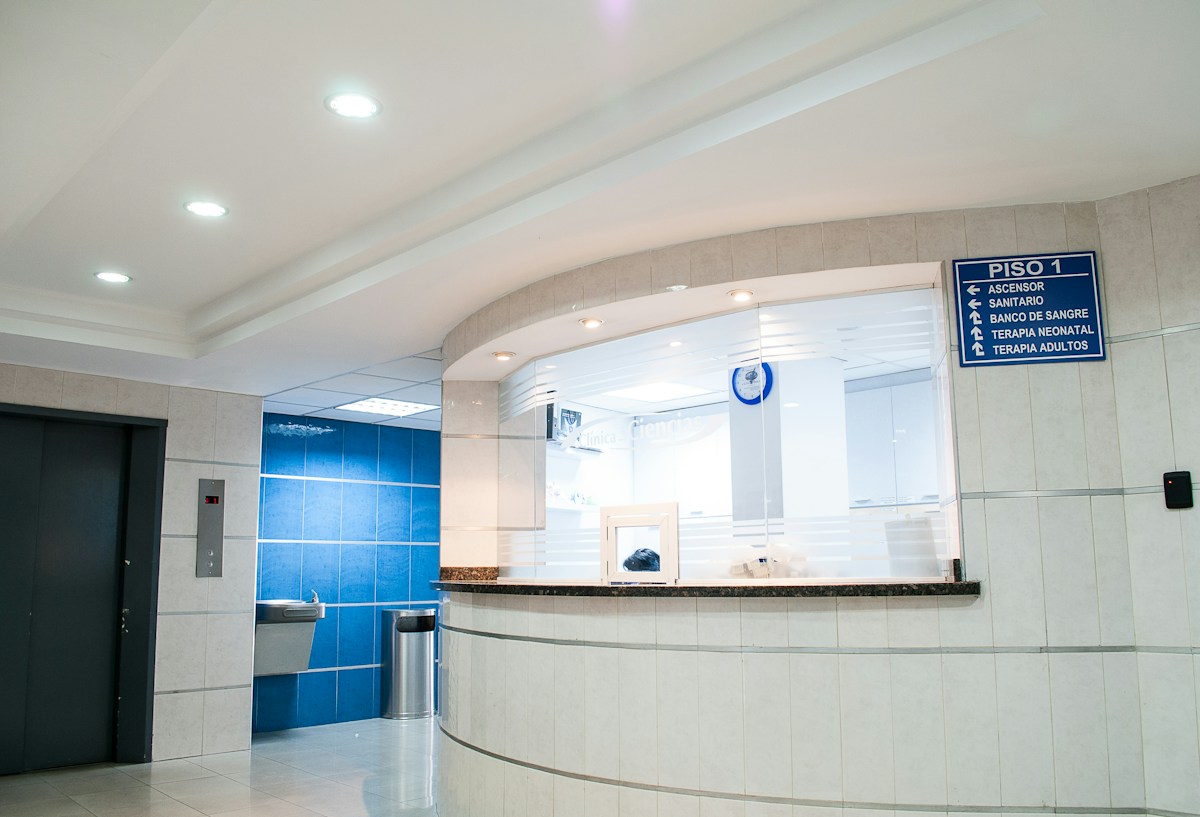
What's Costing Urgent Care Practices Money Right Now
These are the specific, avoidable spots where urgent care revenue quietly disappears before a claim ever gets appealed.
E&M visits default to 99213 across the board, even when the documented complexity — multiple problems, prescription management — actually supports 99214.
After-hours add-on codes (99050, 99051, 99060) never get applied, even though the center is open every evening and weekend that qualifies for them.
Procedures like laceration repair and I&D get billed without modifier -25 on the same-visit E&M, so the payer bundles the visit into the procedure and pays for it once.
Rapid tests — strep, flu, COVID, UA — get performed and documented but never billed as separate charges.
Workers' comp and occupational medicine visits get billed against the wrong state fee schedule, delaying payment on injury and drug-screen claims.
COVID and respiratory test billing gets denied because a payer's current coverage policy — which keeps shifting post-PHE — was never checked before submission.
Top Urgent Care Claim Denial Reasons — and How We Eliminate Them
Most Urgent Care denials are preventable. Our team knows exactly what to look for before submission.
❌ Systematic E&M Downcoding — 99213 Default Regardless of MDM
The single most costly urgent care billing pattern: a practice defaults every established patient visit to 99213, regardless of what was actually documented. A patient with acute bronchitis, hypertension requiring prescription adjustment, and a rash requiring two prescription drugs has three problems addressed, prescription drug management, and moderate risk — that's 99214 by 2021 MDM criteria. Coding it as 99213 loses $30–$45 per visit. At 80 patients per day with 40% meeting 99214 criteria, that's $876,000 in annual undercoding — without billing a single thing incorrectly.
✓ Our Fix
We review every urgent care visit note against 2021 MDM complexity criteria: number of diagnoses/problems, amount and complexity of data, and risk of complications and/or morbidity. We assign the highest supported E&M level for every visit. We also provide E&M audit data to the practice monthly, showing the distribution of levels coded vs. the distribution of levels documented — so providers can see exactly where documentation patterns support higher coding.
❌ After-Hours Add-On Codes Never Applied
The majority of urgent care centers are open during hours that qualify for after-hours add-on codes: evenings until 8–10 PM, weekends, and holidays. Code 99050 adds $20–$30 per qualifying visit for services provided outside normal business hours. Code 99051 adds $35–$65 for evenings, early mornings, and weekend/holiday services. A center open Monday–Sunday until 9 PM generates 70+ qualifying visits per day for one or both of these codes. At $30 average per visit, that's $765,000 in uncollected revenue per year from one omitted add-on code.
✓ Our Fix
Our billing system is configured with each client's defined normal business hours. Every claim is automatically evaluated against visit time and day of week. Qualifying visits receive the appropriate after-hours add-on code as a matter of course — not as an exception that must be caught manually.
❌ Procedure Billed Without Modifier -25 on E&M
When a laceration repair, I&D, splint application, or EKG interpretation is performed during an urgent care visit, both the procedure and the E&M are billable. The E&M requires modifier -25 to indicate it is a significant, separately identifiable service beyond the procedure itself. Without modifier -25, payers bundle the E&M into the procedure and pay only the procedure rate. On a laceration repair day with 15 procedures, missing modifier -25 on each costs the practice $375–$675 from E&M bundling alone.
✓ Our Fix
Our charge entry review flags every visit that includes a procedure code and verifies that modifier -25 is applied to the E&M. We also verify that the E&M documentation supports a separately identifiable clinical evaluation beyond the procedural work — essential for modifier -25 to withstand audit.
❌ Rapid Test CPT Codes Not Billed Separately
In-office rapid tests (strep, flu, COVID, UA, pregnancy) are billable as separate charges. When a biller processes the encounter and only enters the E&M code, every rapid test performed that day is uncompensated. In a busy urgent care center performing 50 rapid tests per day at an average of $25 reimbursement each, that omission costs $1,250 daily — $456,000 annually — from tests already performed and already documented in the chart.
✓ Our Fix
Our charge capture protocol includes a rapid test checklist that maps against documented test orders in the visit note. We verify every rapid test billed against every rapid test ordered. When the billing system doesn't auto-capture test charges from the EHR, our billers manually verify the test log against charges submitted before end of day.
Our Urgent Care Billing Process, Start to Finish
Charge Capture & MDM-Based Coding
Every visit note is reviewed against 2021 MDM criteria — problems addressed, data reviewed, risk — and coded to the highest level the documentation actually supports, not a default level.
Eligibility & Same-Day Verification
Real-time eligibility is checked across 400+ payers before or at check-in, so coverage issues surface before the claim, not after.
Add-On & Modifier Compliance Audits
Every claim is checked for after-hours add-on eligibility (99050/99051/99060) and for modifier -25 on any E&M billed alongside a same-visit procedure.
Denial Prevention & Recovery
Rapid test orders are matched against what's actually billed on every claim, and any denial that still occurs is corrected at the root and appealed.
Reporting & Revenue Insights
A real-time dashboard tracks your E&M level distribution, denial trends, and collection rate, so you always know exactly where your urgent care revenue stands.
Everything Included with ZenoMedix RCM Urgent Care Billing

- 2021 MDM-based E&M level optimization — 99213 vs. 99214 decision on every chart review
- After-hours add-on code capture (99050/99051/99060) for every qualifying visit
- Modifier -25 applied to every E&M when procedure is performed same visit
- Rapid test billing: strep, flu, COVID, RSV, UA, urine culture, pregnancy
- Laceration repair, I&D, splinting, and wound care procedure billing
- Workers comp and occupational medicine billing — all 50 state fee schedules
- Real-time eligibility verification for 400+ payers before patient check-in
- 98.5%+ collection rate for urgent care centers
Complete Revenue Cycle for Urgent Care Practices
What Sets ZenoMedix RCM Apart in Urgent Care Billing
Not every billing company is built the same way. Here's what changes when your urgent care claims run through ours.
MDM-Trained Coders, Not Generalists
Our coders review every urgent care chart against 2021 MDM criteria and code to what's documented, not to a safe default.
Every Denial Appealed, Never Written Off
100% of denials get tracked, corrected at the root cause, and appealed — a denied claim is never just absorbed as a loss.
Pay Only When We Collect
Percentage-based pricing tied to what we actually collect for your center, with no long-term contract locking you in.
Real-Time Visibility Into Your Revenue
A live dashboard shows your collection rate, E&M distribution, and denial trends — no waiting on a monthly PDF to know where your revenue stands.
We Partner With Every Type of Urgent Care Practice
High-Volume Walk-In Clinics
E&M levels reviewed against 2021 MDM criteria on every chart, so high-acuity visits aren't systematically downcoded to 99213.
Extended-Hours & Weekend Centers
After-hours add-on codes (99050/99051/99060) applied automatically to every visit that qualifies, based on your center's actual posted hours.
Occupational Medicine / Workers' Comp Providers
Work physicals, drug screens, and injury evaluations billed against the correct state-specific WC fee schedule and payer.
Procedure-Heavy Urgent Care Centers
Laceration repair, I&D, splinting, and X-ray interpretation billed with modifier -25 applied correctly on the same-visit E&M.
Multi-Site Urgent Care Groups
Centralized, same-day charge entry across every location with EHR integration (Experity, Athenahealth, and others) to eliminate manual re-entry lag.
Retail & On-Site Testing Clinics
Rapid diagnostic test charges (strep, flu, COVID, RSV, UA, pregnancy) captured against every documented test order, not just the visit E&M.
Urgent Care Billing Available in All 50 States
From California to New York, our Urgent Care billing specialists understand your state's Medicaid program, payer mix, and compliance requirements.
Find Your State →Urgent Care Billing FAQ
Under the 2021 CPT guidelines, E&M level is based on Medical Decision Making (MDM) — not visit length or bullet-point documentation. MDM has three elements: (1) Number and complexity of problems addressed — multiple acute minor illnesses or one acute, uncomplicated illness; (2) Amount and complexity of data reviewed — ordering tests, reviewing external records, independent interpretation of results; (3) Risk of complications — prescription drug management is "moderate risk" and alone qualifies for 99214. We evaluate every urgent care visit note against all three MDM elements and select the highest level supported by the documentation. When documentation is borderline, we use the lower level and flag the pattern for the provider.
Three add-on codes apply to qualifying urgent care visits: 99050 covers services rendered outside normal business hours — any visit occurring before your defined opening time or after your defined closing time on a weekday adds approximately $20–$30. 99051 covers services during the evening (6 PM–8 AM), weekends, and holidays — this adds $35–$65 per qualifying visit and is what most urgent care centers miss on every evening and weekend visit. 99060 covers emergency care services provided on an urgent basis outside regular office hours — rare but applicable when documented. All three are add-ons that stack on top of the E&M, not replacements for it.
Workers compensation billing is state-specific: California, Texas, Florida, New York, and other states each have their own fee schedules, required forms, and authorization processes. WC claims for urgent care typically cover acute occupational injuries (lacerations, sprains, fractures), first reports of injury, return-to-work evaluations, and drug screen panels. We configure state-specific WC billing for every client, apply the correct fee schedule, and submit to the correct payer — employers' insurance carriers rather than commercial health plans.
Yes. We integrate with the major urgent care EHR platforms — Experity (formerly DocuTAP), Athenahealth, NextGen, Kareo, DrChrono, and others. Integration means charges flow from the clinical EHR into our billing system without manual re-entry. For platforms where full integration isn't available, we implement a structured charge capture process with same-day lag time between patient visit and charge entry, ensuring no visit falls through without billing.
COVID testing billing has evolved significantly from the public health emergency era. Currently: PCR COVID tests (87635) for symptomatic patients are covered by most commercial plans; antigen rapid tests (87426) are covered at lower rates. Point-of-care tests performed in the urgent care center using CLIA-waived testing require a valid CLIA certificate — which must be on file for billing compliance. Insurance coverage for COVID testing has narrowed post-PHE; we verify each payer's current COVID testing coverage policy before billing to avoid denials on tests performed.
When a laceration repair, I&D, splint application, or EKG interpretation is performed during an urgent care visit, both the procedure and the E&M are separately billable — but only if the E&M carries modifier -25, which signals that it was a significant, separately identifiable service beyond the procedure itself. Without modifier -25, the payer bundles the E&M into the procedure and pays only the procedure rate. On a day with 15 procedure visits, missing the modifier on each one costs the practice $375–$675 in bundled E&M revenue. We flag every visit that includes a procedure code and confirm modifier -25 is applied and supported by the documentation before the claim goes out.
In-office rapid tests — strep A (87880), influenza A/B (87804), COVID antigen (87426), RSV (87633), urinalysis (81002), urine culture (87086), and pregnancy testing (81025) — are all separately billable in addition to the visit E&M. When billing only enters the E&M code and skips the test charges, every rapid test performed that day goes uncompensated even though it was already performed and documented. Our charge capture protocol runs a rapid test checklist against the documented test orders in every visit note, so test charges are verified against what was actually ordered rather than left to a manual catch-all at the end of the day.
Urgent Care Billing Results — By the Numbers
See How Much More Your Urgent Care Practice Can Collect
- ✓Specialty-specific coding analysis
- ✓Denial pattern review
- ✓Payer mix assessment
- ✓Revenue recovery estimate